
Price Action Strategies For Trading Shiba Inu (SHIB)
Shiba Inu cryptocurrency action strategy **
The cryptocurrency world has recently been excited about the latest trends and commercial strategies. Among the many available cryptocurrencies is one of the great name SHIBA Inu (SHIB), a decentralized digital currency with a lot of attention from investors and traders. As the ŠIB price event continues to fluctuate wildly, it is necessary to create strategies on how to use these fluctuations and make reasonable business decisions.
Prices for understanding the action
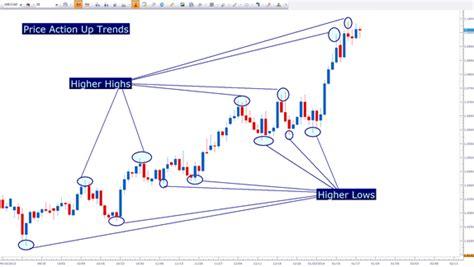
Price action is applied to visual imaging of the market movement, including trends, turns and sequels. Traders who understand price events can determine formulas, fractures and other basic functions that indicate potential business opportunities. SHIB will focus on price setting strategies covering the following indicators:
* Relative Power Index (RSI): This indicator measures the range of recent price changes to determine excessive or excessive conditions.
* Bollinger groups: This group visualizes volatility and provides a range of prices can fluctuate.
* Average diameter: Long trends, short -term dynamics and medium modified strategies depend on these lines to determine business capabilities.
Shib Trade Strategy
Here are several price strategies that can be applied to Shiba Inu Trading:
1
* When looking at the extension of the RSI and Bollinger tape, set a trend (ascension or downturn).
* When RSI reaches 70, it is considered to be bred. Participation above the upper band shows a strong rise.
* On the contrary, when RSI reaches 20, it is sold and escape under the lower zone indicates a small leak.
- Average reverse with sliding diameters:
* When looking at sliding diameters, set a trend (ascension or downturn).
* When a brief trend passes me above the long -term, the bull signal is listed.
* On the contrary, when a short trend passes me after a long -term ma, the bear signal is listed.
- Fire Trade:
* Specify the possible breakthrough of Bollinger bands or other price indicators.
* If the price indicator indicates that the prices will break through the line or the resistance line, it’s time to buy shib.
- Range -Employment Trade:
* Specify the upper and lower boundaries of the business range (support and resistance level).
* If the price action is consolidated as much as it may be due to the new range of breakthrough.
Example of Business Plan:
Here is an example of a business plan that contains some of these strategies:
|
store ID |
Data |
Time |
Record |
Exit |
| — | — | — | — | — |
| 1 | 10. January | 14:00 | Buy when RSI reaches 70, expansion Bollinger Band> Upper Band | Sell the resistance of the resistance zone
| 2 | 12. January 15:30 | Buy when the price action exceeds the short -term MA (50 periods) decreases | Sell yourself when the price returns to the level of support
| 3 | 1. February | 11:00 | Buy when RSI reaches 20, Expansion Bollinger Band
Tips and Reflections:
While these strategies provide a solid foundation for Shib trade, remember:
* Risk Management: always set stops and dimensional positions to facilitate potential losses.
* Trade Frequency: Trading, taking into account your risk tolerance and market conditions. You need to discipline your business plan.
* Risk Assessment: Before trading, do detailed research, including understanding of ŠIB base and its technical indicators.
Conclusion:
Prizes strategies can help merchants set possible business opportunities in SHIB.
